

The world is on fire, and you’re exhausted. Yet, you are still being asked to do more, give more, be more.
Meanwhile, you are drowning with productivity tips and hacks, when the best one – the easiest one – is sitting right under your nose: make an excuse.
Maybe the issue isn’t that you make excuses, maybe the problem is that you are bad at making them.
So, let’s talk about how to make better excuses; the kind that preserve you without lighting your integrity on fire. The kind that doesn’t require you to restrain yourself around chips and salsa.
Why Women Aren’t Allowed to Make Excuses
Let’s be real: men make excuses, and it’s called leadership. Women make excuses and it’s called being unreliable, dramatic, or unprofessional. (What? You thought I’d miss an opportunity to call out the hypocrisy?)
From the time we’re old enough to hold a glitter pen, we’re taught to say yes. To smile. To try harder. To take care of everyone’s needs before our own. Oh! And to do it with enthusiasm.
So, when you even think about saying “I can’t,” your brain short-circuits. Cue the guilt, the shame, the mental rerun of all the things you should be doing instead.
This isn’t just internalized guilt. It’s social conditioning. We’ve been trained to associate rest with laziness, boundaries with selfishness, and excuses with failure.
But here’s the truth: you don’t owe everyone your time or energy.
Making a good excuse isn’t flaking, it’s deciding you have something better to do with your time. It’s being honest with yourself that if you don’t want to do something, you don’t have to. It’s setting a boundary.
The Science of Making Good Excuses
According to philosopher Paulina Sliwa at Cambridge (yes, even philosophers are out here studying excuses), a good excuse isn’t just a get-out-of-responsibility card. It actually signals that your intentions were solid, something just got in the way. You meant to do the right thing, but life handed you a flaming bag of chaos instead.
In other words: it’s not about dodging accountability. It’s about showing you acted in good faith, even if the result didn’t land. That’s what makes an excuse believable, acceptable – and sometimes even necessary.
So, if you’re going to bail, postpone, or opt out? Learn to do it in a way that keeps your integrity intact, and your energy protected.
For example, when you want people to know you are interested in spending time with them, but you want to be honest about attending. “Listen, I still want to be invited, but I’m not coming.”
In one sentence you made someone feel like spending time with them is important, (good intention) while managing their expectations about it actually happening. (Acting in good faith.)
The problem is most women don’t get credit for good intentions. (Or even any credit at all.) So, use the opportunity of making an excuse to take the credit you know you deserve. A simple, “I’m too pretty to work” is enough to go ahead and take a break.
You can’t be labeled as flaky, weak, or emotionally unstable when you tell the truth.
Recognize that excuses being seen negatively is a “them” problem. Don’t internalize that pressure to take on responsibility that’s not yours when you’re exhausted or drowning. Stop white-knuckling your way through responsibilities you should’ve declined and the guilty for resenting it all.
Instead weaponize that incompetence with a “I love it when you grocery shop/cook dinner/pick up the kids from school because you are just so much better at it than me.”
But here’s the truth: a well-crafted excuse isn’t a cop-out. It’s a boundary in motion.
What to Say Instead — To Yourself and Everyone Else
If an excuse is really just a boundary with better PR, then let’s upgrade your copy.
Most people struggle not because they make excuses, but because of the negative internal spiral surrounding the guilt experienced of making an excuse, and they suck at delivering them.
Try this two-step approach to making better, guilt-free excuses:
Step One: Talk to Yourself Like You’re Not the Villain
Before you can set a boundary out loud, you’ve got to get your inner critic to shut up long enough to believe you deserve one. Try this:
- “I’m not avoiding. I just don’t want to do it.”
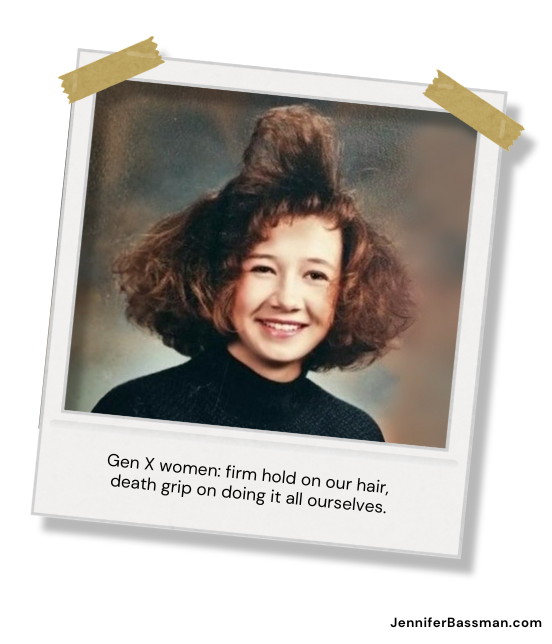
- “This isn’t a good hair day. It’s the sign I needed to tell me that I shouldn’t go.”
- “There are easier ways than doing XYZ to prove I’m dependable.”
Normalize the reframe. Excuses that come from self-respect don’t require apology, they require practice.
Step Two: Say the Thing, But Say It Better
When you need to bow out, delay, or deflect without defaulting to guilt or over-explaining, start here:
- “I’m at capacity this week. Can we revisit this after [realistic timeframe]?”
- “Sorry, I can’t help you. I need to walk my unicorn.”
- “I don’t want to go to work. There are people there.”
And the classic that works almost every time: “I won’t be able to, but I hope it goes well!”
It’s polite. It’s clear. It’s final.
Excuses Aren’t the Problem, Ladies
The truth is most of us don’t need fewer excuses. We need better ones. The kind that say, “I know what I need, and I’m not apologizing for it.”
The desire to make an excuse is not a weakness. It’s a signal! A signal that you’re tired, that your priorities are shifting, that you’re no longer willing to contort yourself to meet unreasonable demands. When crafted with clarity and intention, they become one of the most powerful tools you have for protecting your time, energy, and mental health.
The next time you feel an excuse bubbling up, don’t shove it down or beat yourself up. Pause. Ask yourself:
- Is this protecting me or just postponing something I need to face?
- Is this excuse rooted in fear, or in a boundary I’ve been too scared to set?
You don’t have to say yes to everything. You don’t have to justify your no.
But if you do need to make an excuse, make it a good one.
Ready to Figure Out Which Excuses Are Helping You — and Which Are Hurting You?
I created a quick tool to help you break down your go-to excuses and decide what they’re really doing for you. It’s part clarity check, part boundary booster, and zero shame. Click here for your Excuses Upgrade Kit.