
Week 2 of Burned Out and Don’t Know Where to Start? Series (Check out Week 1 here.)
One of the reasons so many women don’t recognize burnout is because we don’t look burned out.
We’re still showing up. We’re still doing everything. We’re still saying we’re “fine.” (And by the way — the word fine should always be a red flag. Nobody who’s thriving ever says they’re “fine.”)
This is called High-Functioning Burnout.
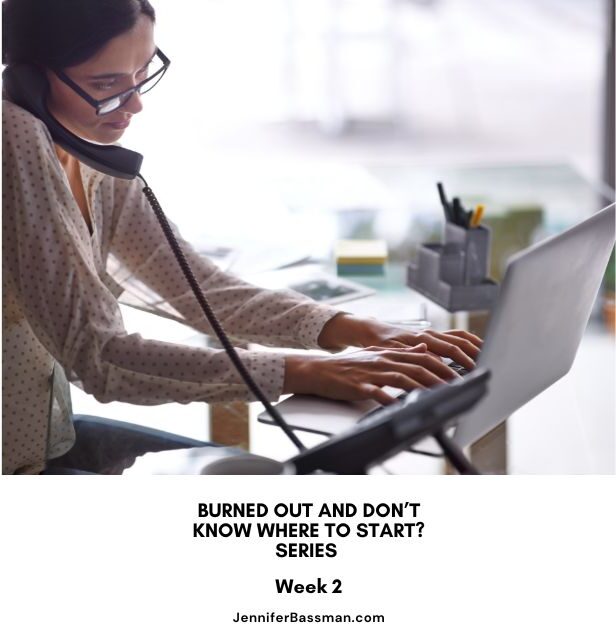
On the outside, you’re nailing it — deadlines met, carpool done, emails sent. On the inside, your nervous system is fried.
Busting the Burnout Myth
When most people hear the word “burnout,” they picture collapse: sobbing in bed, unable to move, missing work, giving up.
But that’s not what burnout usually looks like for women.
For us, it often looks like powering through. Smiling on camera. Signing the permission slips. Showing up to the meeting on time. And dying a little inside every day while you do it.
Because high-functioning burnout is sneaky. It hides behind the illusion of “getting things done.” Which means most women don’t get help until they’ve been stuck in the cycle for way too long, and the longer it goes on, the harder it is to climb out.
The “Hidden” Signs of Burnout in Women
The world has normalized dumping impossible expectations on women. Which means when we keep going with a smile, everyone assumes we’re “fine.” But here’s what’s actually happening:
- Your brain is running too many tabs. Forgetfulness, brain fog, and work taking twice as long aren’t carelessness — they’re your brain maxing out on background programs.
- Resentment is your default setting. Every request feels like an ambush. (“Do I LOOK like the family calendar?”)
- You’ve outsourced your energy to coping mechanisms. Coffee, wine, excuses, whatever keeps you moving — because you’ve got nothing left to lean on.
- Your inner critic won’t shut up. And she’s ruthless, holding you to standards that no human could possibly meet.
- You’re emotionally checked out. You want to care, but you can’t. Joy feels flat. Even when something good happens, guilt about the 300 other things you “should” be doing steals it.
- Tiny problems feel like full-on attacks. (“Could the elevator be any slower today?”)
These aren’t weaknesses. They’re warnings. They’re your nervous system waving a giant red flag that says: I’m at capacity.
Why Women Experience Burnout Differently
When you think about everything you do day in and day out, no wonder your “give a damn” is busted. And you’re not imagining the imbalance.
Research shows women carry 71% more of the hidden family to-do list than their partners. That’s the mental load — the endless, invisible project management of meals, schedules, emotional needs, and logistics.
Women are praised for it. Rewarded for it. Conditioned to believe it makes us “good.” But invisible labor plus constant juggling wrecks your nervous system.
And it’s not just your stress you’re managing. Most women in burnout are also absorbing the stress of their families, coworkers, and clients. That’s compassion fatigue and it drains you faster than anything else.
What to Do First (Small Wins That Actually Work)
You’re busy. You don’t have time for a 3-hour morning routine or a retreat in the woods. (If someone suggests it, feel free to hand them your carpool schedule and walk away.)
But you can start with small wins that lower your stress in the moment — and build momentum toward real recovery.
- Interrupt the Stress Loop.
Stress is like a feedback loop: the more stressed you feel, the more stress hormones your body pumps out. The trick is to break the loop.- How to do it: Close your eyes and breathe. Slowly. A few rounds until your body softens a notch. Less than a minute. It’s biology, not woo — oxygen calms your nervous system.
- Name It.
Awareness = power. Naming the emotion you’re feeling changes the way your brain processes it. “I’m anxious.” “I’m overwhelmed.” “I’m pissed.” When you label it, you activate the logical part of your brain instead of letting the emotional part set everything on fire.- How to do it: Ask yourself: what am I feeling right now? Then literally say the word out loud. (Sometimes throwing up a middle finger as well helps.)
- Shrink it down.
Burnout makes every task feel massive. Combat that by finding a micro win.- How to do it: Identify one tiny step you can take immediately. Send the email draft, put one load of laundry in, drink a glass of water. Micro wins trigger dopamine, which helps your brain shift out of dread and back into action.
Let’s Start Talking About This
If these signs sound uncomfortably familiar, you’re not broken — and you’re not alone. High-functioning burnout isn’t a failure. It’s your body’s way of demanding change.
👉 Need an immediate way to calm your system? Grab my free Stress Reset Toolkit. It’s packed with science-backed resets that actually work in the middle of your day.
👉 Ready to stop “functioning” your way through burnout? Inside the Triumph Toolkit, the Stress Management and Compassion Fatigue modules give you simple, practical tools that help you recover — in 5–10 minutes a day.
And stay tuned. Next week in the Burned Out and Don’t Know Where to Start? series, we’ll dig into how to recover without quitting your job or blowing up your life.