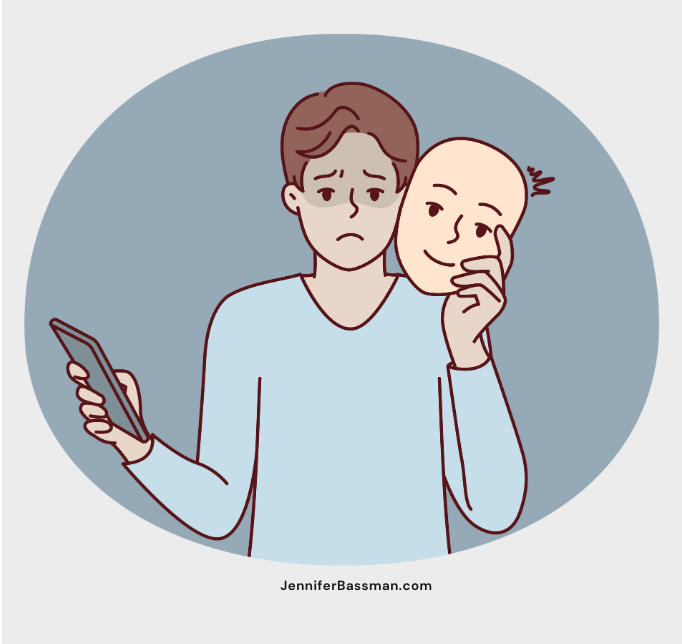


I am an expert at being the most understanding person on Earth. Because I used to be. It was part of my People-Pleasing Schtick.
For years, I rationalized flaky friends and clients, excused disrespectful behavior, and swallowed my own needs like they were candy-coated shame pills. All because I didn’t want to seem difficult.
One of the startling discoveries about myself in my burnout recovery journey: I was too understanding, and it was fueling my resentment.
It made me resentful because:
- It often deeply inconvenienced me.
- I never felt I received the same level of consideration.
- My kindness usually backfired.
I used to think being understanding made me a good person. Turns out, it mostly made me exhausted, bitter, and ignored.
I confused empathy with enabling, and it eroded any boundaries that existed while building quiet resentment. Turns out being endlessly understanding doesn’t make you kind. It makes you a doormat with a really good PR campaign.
Understanding vs. Enabling – What’s the Difference?
My business had clear hours of operation. No less than once or twice a week, someone would be “running late” and need to pick up their pet after closing. And there were usually the same handful of clients making this request.
I accommodated their requests that began to feel like excuses. Five minutes late turned into ten minutes late. Ten minutes late turned into 15 minutes, then 20 minutes, and then up to an hour.
This extra time often meant missing out on dinner plans, an inability to run an errand, or extending an already difficult and exhausting day.
The “no problem” I uttered in response to their ask eventually came through gritted teeth. I could no longer say things like “Happy to help!” or “I’m glad I could be there for you!” because I felt so taken advantage of. My time was clearly not respected.
I was enabling clients to take advantage of me and my kindness.
So, what’s the difference?
Understanding is you acknowledge someone’s challenges without abandoning your own boundaries. It’s compassion with accountability. You recognize that they’re going through a tough time, and you care — but you also expect adult-level behavior and mutual respect.
Example:
“I get that you’ve got a lot to do, and I’m here for you — but when you ask me to stay late every week, it feels disrespectful. I need you to pick up your pup during business hours.”
Enabling, on the other hand, is when you excuse harmful or disrespectful behavior under the guise of empathy. You give people a pass so often that they start thinking passes are their birthright. It’s compassion without boundaries.
Example:
“They called five minutes before closing and said they were running 15 minutes behind again. I know they’re just busy and stressed. I shouldn’t make a big deal out of it.”
Understanding supports growth. Enabling supports patterns.
Understanding respects people’s needs. Enabling erases your own.
Understanding says, “I see your struggle, and I’ll hold you accountable.” While enabling says, “I’ll quietly tolerate whatever, just please don’t be mad at me.”
Why Women Struggle with This More
Let’s get real: Most of us were raised to be likable, helpful, and emotionally agreeable. We were trained to keep the peace, even if it meant setting ourselves on fire to keep everyone else warm.
This conditioning teaches us that being “nice” means being silent. That disagreeing is dramatic. That holding someone accountable is mean.
Spoiler alert: It’s not. It’s emotionally intelligent, healthy, and necessary if you want relationships that don’t drain your soul.
5 Signs You’re Being “Too Understanding”
As if the smoke coming out of your ears and instant feeling of rage aren’t enough of a signal, there are others.
The excuses you make for enabling others to treat you like a doormat are essentially you gaslighting yourself. Things like:
- You downplay how hurt or angry you feel. You tell yourself, “It’s not a big deal,” while stuffing down rage, disappointment, or sadness.
- You rationalize disrespect with, “They’re just going through a lot.” You make up elaborate excuses for why someone can’t get their act together. Spoiler: they probably could, but they don’t have to because you keep letting it slide.
- You’re the emotional mop for everyone’s messes. If someone has a crisis, you’re their emergency contact. But when your world implodes? Crickets.
- You don’t express what you need (or if you do, it’s a whisper). You fear that stating what you want will make people leave, get mad, or think you’re too much.
- You feel guilty for wanting more from people. That simmering irritation? It’s your inner truth trying to claw its way out of your people-pleasing shell.
Here’s the thing: when you constantly make excuses for people, you’re not just enabling them — you’re abandoning yourself.
You lose your voice. Your energy. Your clarity.
Over time, this creates emotional burnout. You start feeling invisible. Like you’re always giving, never getting. Like your kindness has turned into a form of self-sabotage.
How to Stop Being the “Understanding” Doormat
What I didn’t realize about my habit of being too understanding is that the disrespect began with me. I needed to respect myself to protect my time and energy.
People were treating me as I had trained them to. Now it was time to retrain them by using boundaries and speak up rather than rolling over like a possum. Steps I took in this direction included:
- Own my anger. It’s not a character flaw. It’s a sign that something important to you is being violated. Anger requires energy, so you use it to your advantage.
- Not caring what others think of me. It became clear that secretly some of these people who benefited from my lack of boundaries didn’t like me much anymore. Over time, this newfound freedom from others expectations allowed me to not give a shit.
- Stop spinning the story. If someone is consistently unreliable or disrespectful, stop blaming their schedule. Start noticing the pattern. Then, call them out on it. Too bad if their own disrespect of your kindness makes them uncomfortable when its no longer tolerated.
- Get specific with boundaries. Tell people exactly what you need and what won’t fly anymore. Clear is kind. The earth revolves around the sun, not them. Boundaries give them a helping hand getting down off their pedestal.
- Practice with safe people. Start setting micro-boundaries with people you trust. It builds the muscle and your confidence in your own worth.
Choose Respect Over Being Liked
“No good deed goes unpunished.”
“If you give people an inch they take a mile.”
These well-known proverbs likely came from reformed people-pleasers. They were meant to warn people like me but I thought I was somehow immune.
So here is mine: You’re allowed to need things. Say no. Expect follow-through. And yes, even be upset when you don’t get what you deserve.
You don’t have to be the chill, cool girl who never gets mad. You don’t have to accept half-assed effort or ghostly communication just because you “get it.”
If this hit a little too close to home, good. That means you’re ready to change something.
My Triumph Toolkit is filled with science-backed strategies and bite-sized tools to help you stop people-pleasing, set boundaries, and finally feel like yourself again.
Start here. Because your peace isn’t a luxury — it’s a right.